
NAPA 2025 Annual Report

Grow the industry by delivering expertise and programs that advance the safe, sustainable, responsible, and resilient production and construction of asphalt pavements and promote excellence.

As NCAT looks toward its 40th anniversary in 2026, the center remains focused on helping its partners tackle evolving infrastructure challenges. The next 25 years will continue to prioritize collaborative research that equips sponsors with the data, tools and confidence needed to implement high-performing asphalt solutions.

Established in 1986 through a collaboration between Auburn University and NAPAREF, NCAT addresses the needs of maintaining America’s pavement infrastructure through practical research and development initiatives.

PEC Explores Innovative Asphalt Materials for High-Stress Pavements

NAPA’s Pavement Economics Committee wrapped up a request for proposal in June seeking to support the use of high-performance asphalt through demonstrating its performance and speed of construction, providing facility owners, engineers, and contractors with evidence-based guidance for the usage of asphalt pavements in high-stress applications.

First Class: Road Scholars reflect on the industry

What began as a NAPA Research & Education Foundation (NAPAREF) effort to support the graduate program at the National Center for Asphalt Technology (NCAT) at Auburn University (AU) in 2025 led to the inaugural class of Road Scholars: AU graduate students with academic and career aspirations in the pavement industry.

“This project aims to develop a methodology to estimate reclaimed asphalt pavement (RAP) binder PG without extraction and recovery and to identify tests that can help determine the variability in RAP stockpiles. The work has been challenging but extremely rewarding.” – Liz Valenca, Road Scholar

In 2024, NAPA members raised $3 million to fund the Road Scholars endowment, which aims to help keep graduate students focused on the pavement innovations of the future.

2025 Road Scholars scholarship recipients said the financial support she received as a member of the first class of Road Scholars has been invaluable during her work on a National Cooperative Highway Research Program (NCHRP) Ideas Deserving Exploratory Analysis (IDEA) project.

“Being part of NCAT has been an incredibly rewarding experience, both academically and professionally. The collaborative environment, access to state-of-the-art research, and mentorship from experienced faculty have reinforced my passion for asphalt materials research. I am grateful for the opportunities provided by the Road Scholars program and look forward to applying my knowledge to make meaningful contributions to the field.” – Amir Jafarmilajerdi, Road Scholar

NAPA’ s first-of-its-kind event brings together global asphalt experts to discuss the industry’s best practices in the pursuit of efficiency and sustainability.

In the fall, The Road Forward International Summit explored innovative solutions and best practices for reducing the carbon footprint associated with asphalt pavements and provided an unparalleled platform for sharing research findings, discussing challenges, and networking with global leaders committed to sustainable pavement technologies. Proceedings will be published in early 2026.

The Summit brought to Chicago leading minds from government, industry, and academia to highlight advances in the asphalt pavement industry that are fueling the decarbonization effort and the journey to NetZero, serving as both a showcase of progress and a catalyst for the collaborative action needed to accelerate the journey toward a sustainable future.

NAPA Senior Director, Sustainability & Intelligent Construction Amlan Mukherjee joined a special episode of Pave It Black to discuss the Summit, released on Dec. 2.

The Road Forward Annual Review: 2025

Launched in 2022, The Road Forward (TRF) outlines the asphalt pavement industry’s commitment to net zero carbon pavement production and construction. In the first quarter of the year, NAPA published The Road Forward: Reflecting on the First Three Years (2022-2024) to encapsulate progress and outcomes. The 2025 review augments that report by examining the program’s fourth year along with ongoing developments.

Steering Committee Formed, Officers Elected

At NAPA’s Midyear Meeting, the Board of Directors approved the charter for The Road Forward Steering Committee, further formalizing TRF’s governing and operational structure. This committee consists of up to nine members from TRF Partner companies and will help influence strategy, activities, and sabbaticals for the program.

Followed by a nomination period, an August election identified officers to serve through December 2026. Our immense thanks to the following individuals and their companies for their ongoing leadership:

Officers

CHAIR: Heather Dylla, Construction Partners Inc.

VICE CHAIR: Trevor Wagoner, Astec

Raven Adams, Granite Construction 

Maure Creager, CertainTeed 

Will Gallagher, Gallagher Asphalt 

Susan Listberger, Cargill 

Courtney Rice, Owens Corning 

Ron Sines, CRH Americas Materials

Reports

(Climate-Conscious Design Series, March 2025)

When successfully engineered, designed, produced, and constructed, pavements incorporating RAP and RAS contribute to both economic and environmental sustainability while maintaining – or even enhancing – the performance and longevity of the pavement and overall resilience.

(IS-138, June 2025)

The results of the asphalt pavement industry survey for the 2023 construction season show that asphalt mixture producers have a strong record of employing sustainable practices and continue to increase their use of recycled materials and warm-mix asphalt (WMA).

(SIP-111, June 2025)

This report showcases the energy and greenhouse gas emission benefits associated with adopting WMA technologies and using recycled materials in asphalt production. Since 2009, NAPA has conducted an annual survey in partnership with FHWA to quantify industry adoption of such environmentally friendly technologies. The findings of this report are intended to compliment the 2023 Construction Season survey (IS-138).

Webinars

(April 7, 2025)

This webinar discusses the concepts of a circular economy along with recent industry trends and how the circular economy impacts the asphalt business.

(August 25, 2025)

This webinar explores WMA technologies already in use across the country and reveal where the industry is headed with half-warm-mix asphalt (HWMA). Attendees receive practical insights into mix design, production techniques, and current usage of WMA.

(December 10, 2025)

This webinar explores WMA technologies already in use across the country and reveal where the industry is headed with half-warm-mix asphalt (HWMA). Attendees receive practical insights into mix design, production techniques, and current usage of WMA.

Media

(Canary Media, February 20, 2025)

(Rock to Road, May 2, 2025)

(NAPA Quarterly, Fall 2025)

The Road Forward Sabbatical

University of Nevada, Reno, Professor Adam Hand is the TRF Sabbatical participant for the 2024-2025 academic year.

Each year, member companies help the industry determine how efficient approaches to asphalt mix production are advancing across the country.

Reclaimed asphalt pavement (RAP) and warm-mix asphalt (WMA) usage can lead to greenhouse gas (GHG) reductions from transport and fuel use due to using a lower the volume of virgin materials in new pavements and lower burner temperatures.

SIP-111 Energy and Emissions Benefits of RAP and WMA Usage 2023 highlights the environmental benefits of using recycled materials and warm-mix asphalt (WMA) technologies during the 2023 construction season.

This report complements the 2023 Construction Season Recycled Materials and WMA survey report and underscores the asphalt industry’s progress in sustainability.

Key Findings:

RAP

WMA

Use of

avoided

Reduced
production
temperatures
saved

and cut

96.1

2.9

2.1

0.14

million tons
of reclaimed
asphalt pavement

MMT of CO2e

trillion Btu

MMT of CO2e

— comparable to

620,000

cars.

— equal to the emissions of

31,000

cars.

Key Findings:

RAP

Use of

96.1

million tons
of reclaimed
asphalt pavement

avoided

2.9

MMT of CO2e

— comparable to

620,000

cars.

WMA

Reduced
production
temperatures
saved

2.1

trillion Btu

and cut

0.14

MMT of CO2e

— equal to the emissions of

31,000

cars.

Data is still the name of the game in sustainable pavements and NAPA continues to serve as a conduit between industry, academia, and government through its research and survey efforts.

In August, NAPA solicited comments on the Product Category Rules (PCR) for Asphalt Mixtures, version 2.1. The purpose of the mid-cycle update was to:

  • Expand the geographic applicability of the PCR to include Mexico in addition to Canada and the United States, following the same roadmap of regionalizing upstream datasets and harmonizing with Mexican standardizing organization, Organismo Nacional de Normalización y Certificación de la Construcción y Edificación (ONNCCE).
  • Update definitions of EPD types to align with the ACLCA Guidance for Determining EPD Types and Calculating and Communicating Data Specificity Through the Supply Chain.
  • Update guidance for the use of PCRs and EPDs for upstream materials use.
  • Clarify independent third-party verification of the Emerald Eco-Label tool, the underlying LCA, and recent updates including the addition of Simulator tool and the Quality Control program, which add to the transparency and veracity of asphalt EPDs.

Version 2.1 has completed a public comment period and been independently verified by a review panel and is soon to be released for public use.

Meanwhile, the work on updating the PCR to version 3 is already underway with an update to the underlying LCA being conducted at the same time. The LCA is looking to extend the scope to include the construction life cycle stage (A4 – A5) for asphalt mixtures. We are harmonizing and coordinating with the PCR that is being developed by ARRA for asphalt recycling operations. A data collection process for A4 – A5 is currently being conducted, we look forward to your participation in sustaining an updated industry representative LCA for asphalt mixtures. Version 3 of the PCR is expected to be in use by April of 2027.

Data Privacy Features Empower EPD Publishers

Asphalt mix producers using NAPA’s Emerald Eco-Label (EEL) tool to publish and manage their environmental product declarations (EPDs) gained even more ways to customize who can access that data. A new EEL feature allows account owners to denote whether published EPD data is available to the public or reserved only for selected customers.

Market Access

As of December 2025, public EPDs in Emerald Eco-Label are being made available to third party tools like EC3 that provide private market customers direct access to asphalt plants with EPDs. Major customers such as Google and Amazon are viewing TRF partner companies preferentially as potential vendors with commitments to decarbonization similar to their own goals of reducing Scope 3 emissions (some partner companies may have been contacted by a consultant working on behalf of a customer). As a contrast to public procurement scenarios where EPDs are being required, in private markets EPDs are providing competitive advantage and market access.

While activity quieted with the new administration, asphalt producers continued their commitment to efficient practices. By July, 40 asphalt plants achieved ENERGY STAR® Certification – more than any industrial sector in its first participating year.

ENERGY STAR certification is awarded by the EPA to manufacturing plants that score in the top 25% of energy performance nationwide, based on the ENERGY STAR Energy Performance Indicator (EPI) tool developed in collaboration with industry partners. The EPA continues to certify asphalt plants participating in the volunteer process.

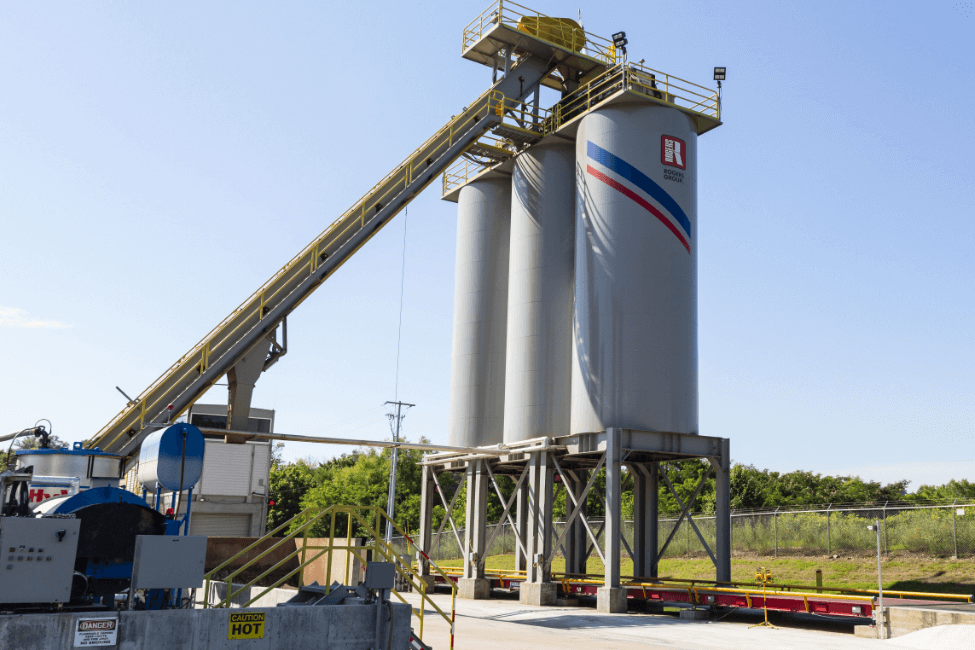
Six asphalt mix plants from NAPA members were recognized at the Annual Meeting as 2025 ENERGY STAR Certified Facilities. Four of those six plants are owned by subsidiaries of CRH Americas: Cadillac Asphalt’s Rawsonville Plant in Belleville, Michigan, Callanan Industries’ Cordell Road Drum Plant in Schenectady, New York, Inland Asphalt’s Sullivan Plant in Spokane, Washington, and Tilcon Connecticut’s New Britain Drum Plant. Rounding out the inaugural list included two plants owned by Rogers Group, their Candora Asphalt Plant in Knoxville, Tennessee, and Huntsville Plant in Alabama.

More ENERGY STAR certified plants were announced in June.

“Empowering your crews to take ownership of their plant is key. When you can get them to care about the condition of the plant, cleanliness, maintenance, and efficiency become a matter of pride – and the crew that runs Candora is very proud of their plant.”

Mike Smiddy
Candora Plant Manager

Operational Excellence. Quality in Construction. For NAPA members, these are more than platitudes, they are hard-won bragging rights that their companies perform just as well as the pavements they produce. NAPA Quarterly continued its focus through profiles on the award-winners that reveal how some of our nation’s best laid asphalt pavements are made.

Prestige Awards

Read about the 2024 NAPA Award winners below.

Sheldon G. Hayes Award – Lindy Paving

Ray Brown Airport Pavement Award – S.T. Wooten Corp.

Larry H. Lemon Awards for Quality in Construction (QIC) – Shelly & Sands Inc. (2); Earle Asphalt Co. (2); E&B Paving; Apex Paving Co., Delta Companies Inc. ; Gerken Paving, Inc. ; Summers-Taylor, Inc. ; Volunteer Paving – selected from 269 QIC Award Recipients.

2025 Diamond Commendations

236

Achievement

216

Sustainable

152

Quality

30

Paving

18

Terminal

Shining Bright with a Diamond

NAPA’s new application window approach –targeting commendation submissions between April and August – meant members were able to share the big news with their community even earlier in the paving season, giving companies a great platform for communicating about projects, job openings, and more.

Operational Excellence

Community Involvement

Lehman Roberts Co.

Community Involvement

Callanan Industries

Community Involvement

O&G Industries

Enviromental Leadership

Tilcon

APA sets sights on actionable deployment

With the hiring of Executive Director Mike Skinner, the Asphalt Pavement Alliance (APA) set a new course for growing the asphalt pavement market.

The APA honored the Illinois Tollway with a Perpetual Pavement Award at The Road Forward International Summit in Chicago, one of dozens handed out to pavements that stand the test of time either through performance, by design, or through conversion. Also receiving a Perpetual Pavement Award: a nine-mile stretch of “The Mother Road,” Route 66 in New Mexico.